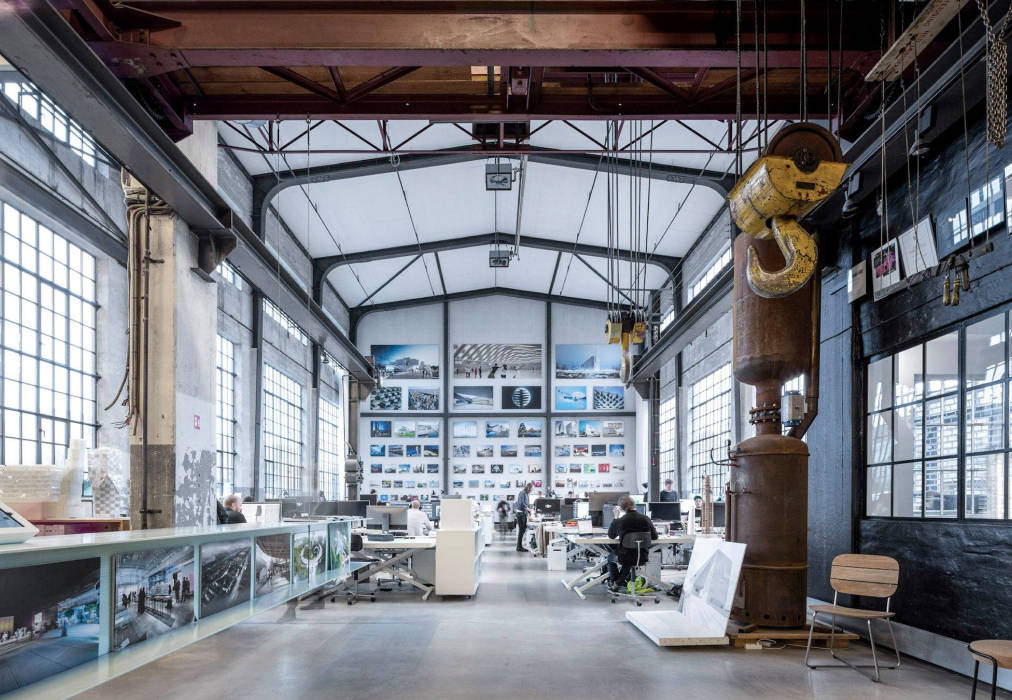
BIG HQ: Innovative Copenhagen Architecture & Sustainability – A New Paradigm for Urban Workspaces
In the vibrant tapestry of Copenhagen's historic harbor, a striking architectural marvel stands as a testament to innovation, collaboration, and environmental stewardship: the BIG HQ, headquarters of the renowned Bjarke Ingels Group. Far more than just an office building, this seven-story structure embodies BIG's groundbreaking design philosophy, transforming a challenging urban footprint into a dynamic, sustainable, and highly collaborative workspace. It's a beacon of modern architectural thought, designed not only to house creative minds but also to broadcast a clear message about the future of urban development and green building practices.
Anchored firmly in the city's rich heritage of industrial warehouses and factories, BIG HQ respectfully nods to its surroundings while boldly pushing the boundaries of what a contemporary workplace can be. This building is a living case study in how thoughtful design can resolve complex challenges, integrate diverse disciplines, and set new benchmarks for sustainability, making it an essential reference for architects, urban planners, and environmentalists alike.
Reimagining the Workspace: A Vertical Village in Copenhagen Harbor
The design journey of BIG HQ began with a significant spatial conundrum: a small, narrow footprint situated at the very end of a pier. The firm's vision was to create a single, cohesive work environment for all its employees, a challenging feat when minimum building regulations would typically necessitate splitting the team across at least four distinct levels. This fragmentation, Bjarke Ingels Group understood, could hinder the seamless collaboration and cross-pollination of ideas that are central to their creative process.
In a characteristic move of architectural brilliance, BIG embraced a counterintuitive solution: rather than accepting the division, they chose to split all the floors in half, effectively doubling the number of levels. This ingenious structural decision didn't just add more floors; it created a series of interconnected, overlapping half-levels that cascade upwards, forming a continuous, flowing internal landscape. This design fosters an extraordinary sense of connectivity, allowing teams to remain visually and physically linked despite being on different "floors." Imagine a vertical village where sightlines are preserved, and impromptu interactions are encouraged simply by a glance across a void or a short stroll up a ramp.
This innovative approach directly addresses the perennial challenge of creating collaborative workspaces in multi-story buildings. Traditional floor plates often create isolated silos, but BIG HQ’s design promotes a fluid, dynamic environment. It encourages spontaneous encounters, breaks down hierarchical barriers, and ensures that everyone feels part of a larger, unified organism. For a deeper dive into how this unique design fosters collaboration, explore our related article: Beyond Floors: BIG HQ's Unique Design for Collaborative Workspaces. This design strategy serves as a practical lesson for any organization seeking to enhance internal communication and foster a strong, collective culture within its physical space.
The LEAP of Innovation: An Integrated Design Philosophy
One of the most defining characteristics of BIG HQ is its status as BIG’s first full-scale realization of LEAP design. LEAP, an acronym for Landscape, Engineering, Architecture, and Product design, represents a truly holistic and integrated approach to building creation. It’s a philosophy that breaks down traditional silos between design disciplines, ensuring that every element, from the grandest architectural gesture to the smallest detail, is conceived and executed with a unified vision.
At BIG HQ, this meant that the entire building was meticulously sculpted by the dedicated BIG LEAP team. This includes everything imaginable: from the overarching urban design and the intricate glass facades that define the building's exterior, down to the very concrete columns that support it, and even the bespoke door handles that visitors touch daily. This comprehensive oversight ensures a seamless aesthetic and functional coherence throughout the structure.
The benefits of such an integrated approach are profound. Firstly, it guarantees a higher degree of quality control and design consistency. Every component, no matter how minor, reflects the core principles and aesthetic of the Bjarke Ingels Group. Secondly, it optimizes functionality; for instance, engineering solutions are not merely applied post-architecture but are interwoven into the architectural concept from the outset, leading to more elegant and efficient resolutions. Thirdly, LEAP design fosters innovation by encouraging cross-disciplinary problem-solving, often leading to unique and more effective solutions than traditional segmented approaches.
Practical Tip for Integrated Design: When embarking on any significant project, consider assembling a multidisciplinary design team from day one. Involve landscape architects, structural engineers, product designers, and even user experience experts early in the conceptual phase. This collaborative synergy can prevent costly revisions later and result in a more cohesive, functional, and aesthetically pleasing outcome.
A Beacon of Green Building: Sustainability at its Core
Beyond its innovative spatial organization and integrated design methodology, BIG HQ stands as a powerful exemplar of sustainable architecture. The building is designed with the ambitious goal of achieving the Danish sustainability certification, DGNB Gold. This rigorous certification reflects a commitment to environmental performance, resource efficiency, and occupant well-being throughout the building's lifecycle.
To achieve this high standard, the Bjarke Ingels Group integrated several cutting-edge sustainable features into the HQ’s fabric. A cornerstone of its green credentials is the extensive use of FutureCem concrete. This innovative material significantly reduces CO2 emissions during production by approximately 25% compared to conventional concrete. The choice of materials like FutureCem demonstrates a forward-thinking approach, addressing the embodied carbon footprint of construction, which is a critical aspect often overlooked in green building discussions.
Furthermore, BIG HQ integrates robust renewable energy systems. Solar panels are strategically placed to harness the sun's energy, converting it into clean electricity for the building's operations. Complementing this, geothermal energy systems tap into the earth's stable temperature to provide efficient heating and cooling, drastically reducing reliance on fossil fuels. These active systems, combined with passive design strategies, minimize the building's operational energy consumption.
Another crucial element of BIG HQ’s sustainability strategy is its natural ventilation system for the office spaces. By designing the building to maximize natural airflow, the need for energy-intensive mechanical air conditioning is significantly reduced. This not only lowers energy consumption but also creates a healthier and more comfortable indoor environment for occupants, fostering productivity and well-being. For a detailed exploration of these specific sustainability features and the path to certification, read our related article: Sustainable Design: Achieving DGNB Gold with BIG HQ's Innovations.
Fact: DGNB (Deutsche Gesellschaft für Nachhaltiges Bauen – German Sustainable Building Council) is one of the world's most comprehensive certification systems for sustainable buildings, evaluating projects across ecological, economic, sociocultural, technical quality, process quality, and site quality criteria.
Beyond the Blueprint: BIG HQ's Impact on Modern Architecture
BIG HQ is more than just a new office building; it's a profound statement on the evolving nature of architecture and its responsibility to both people and planet. It demonstrates that spatial constraints can be catalysts for innovation, that collaboration is a design principle in itself, and that truly sustainable buildings are those that integrate environmental consciousness from concept to door handle.
The Bjarke Ingels Group has long been known for its ability to challenge conventions and rethink typologies, and their headquarters acts as a living manifesto of this philosophy. By designing a workspace that encourages connection, minimizes environmental impact, and embraces a holistic design process, BIG HQ sets a compelling precedent for future urban developments globally. It effectively "broadcasts" a vision for architectural excellence that is not just aesthetically pleasing but also profoundly purposeful and deeply sustainable.
The lessons learned from BIG HQ are invaluable for anyone involved in design, construction, or urban planning. It highlights the importance of user-centric design, the power of integrated thinking, and the imperative of prioritizing sustainability at every turn. Its thoughtful integration with Copenhagen's historical harbor, combined with its futuristic outlook, ensures its place as a significant landmark in contemporary architecture.
Conclusion
The BIG HQ in Copenhagen stands as a monumental achievement, seamlessly blending innovative architecture with pioneering sustainability efforts. From its ingenious solution to spatial constraints that fosters unprecedented collaboration, to its holistic LEAP design approach, and its unwavering commitment to achieving DGNB Gold certification through FutureCem concrete, solar, geothermal, and natural ventilation systems, the building exemplifies what is possible when vision meets responsibility. It is not merely a workspace but a dynamic symbol of the Bjarke Ingels Group's core values, serving as an inspiring model for how future buildings can be designed to enrich lives, foster community, and tread lightly on our planet. As architecture continues to evolve, BIG HQ will undoubtedly remain a touchstone for innovation, demonstrating how thoughtful design can address complex challenges and create environments that are both beautiful and profoundly beneficial.